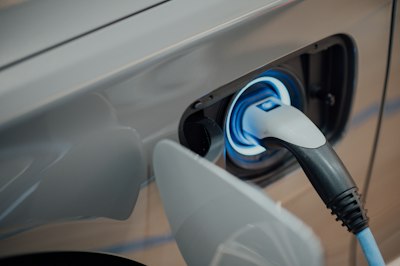
We apply deep learning molecular dynamics to find, optimize, and validate next-generation battery materials. Silicon anodes. Solid-state electrolytes. At the speed your production roadmap demands.
Our DLMD pipeline bridges the gap between first-principles science and the throughput your R&D program needs — validated by peer-reviewed research at Argonne and Berkeley Lab.
DFT-based AIMD via VASP generates gold-standard atomic trajectory data at multiple temperatures — 5,000+ physically consistent frames per material.
A deep neural network (DeePMD-kit) is trained on AIMD data, learning the potential energy surface with >99% force and energy accuracy.
Classical MD via LAMMPS + DeepMD runs 9,000–20,000 atom systems over 3–5 ns at 6–8 temperatures — 3,730× faster than AIMD.
Top computational candidates proceed to physical validation at Berkeley Lab or Argonne. AI predictions confirmed. Results fed back into the next iteration.
We focus where the industry bottleneck is tightest — silicon anodes now entering mass production, and solid-state electrolytes racing toward the 2027–2028 production window.
Silicon anodes offer 10× the theoretical capacity of graphite — but volume expansion up to 400% during cycling destroys conventional binders and structures. We use AI to design solutions production lines can actually use.
Solid-state batteries require electrolytes that are chemically stable, mechanically compatible, and ionically fast. The composition space is vast. DLMD lets us screen it at a speed physical experiments never could.
The following are actual computational findings from peer-reviewed research by our CSO Dr. Anh T. Ngo, published in ACS Applied Energy Materials, Journal of the Electrochemical Society, and Nature Materials. This is the science behind our service.
Challenge: Li₂ZrCl₆ exists in multiple crystal phases. Which phase should your synthesis target? Conventional experiments take months to compare them.
Challenge: Ti doping improves LPS conductivity — but at what concentration? Testing four concentrations physically would take a year of synthesis and electrochemical testing.
Challenge: Li₃TiCl₆ is a promising cost-effective halide cathode. But the underlying Li-ion transport mechanism — which governs how to engineer faster conductivity — was unknown. Physical NMR experiments could not resolve it.
AI decomposes ionic conductivity into directional components (x, y, z) — revealing where to engineer ion channels in the crystal.
Amorphous Li-Ti-P-S is a mixed ionic-electronic conductor (MIEC) — it conducts both Li-ions and electrons. This enables high-capacity Li-S batteries by eliminating insulating discharge products.
Our platform is not a general-purpose ML tool applied to chemistry. It is a battery-materials-specific DLMD framework, trained, validated, and refined over years of Argonne and Berkeley Lab research.
DLMD starts at the quantum level (DFT-AIMD) and scales to simulation cells of 20,000+ atoms — capturing the complex dynamics of amorphous and disordered materials that small-scale DFT simply cannot represent.
Standard simulation tools use the Nernst-Einstein equation with the self-diffusion coefficient — which can overestimate conductivity by 14× in materials with anti-correlated ion motion (like Li₃TiCl₆). Our DLMD captures both self and distinct MSD contributions, computing Haven's Ratio for accurate conductivity prediction.
Amorphous solid electrolytes and mixed ionic-electronic conductors cannot be modeled with crystalline DFT approaches. Our DLMD handles disordered Li-Ti-P-S, amorphous LPS, and other non-crystalline systems — the exact materials enabling next-generation Li-S batteries.
Every computational study we publish is validated against physical experimental data — ionic conductivity measurements, X-ray diffraction, and electrochemical cycling at Argonne and Berkeley Lab. Clients receive predictions with documented accuracy margins, not unvalidated models.
We don't just tell you which material is faster — we tell you why. Transport mechanism analysis (hopping type, directional anisotropy, energy barrier mapping, residence time) gives your R&D team the structural insights to improve the next synthesis iteration intelligently.
Three co-founders covering every dimension of battery material R&D: world-class computational science, Berkeley Lab materials invention, and commercial scale-up experience.
Former CEO of Zeptor Corporation — an Intel spinout developing silicon anode Li-ion batteries. Brings the industry network and commercial relationships that turn research into paying contracts.
Senior Scientist at Lawrence Berkeley National Laboratory. Inventor of HOS-PFM multifunctional conductive polymer adhesives — enabling simultaneous electron and Li-ion transport in silicon anodes. Published in Nature Energy and Energy & Environmental Science.
Professor at University of Illinois Chicago and Physicist at Argonne National Laboratory. Developer of the DLMD simulation platform. Published three peer-reviewed papers validating DLMD for halide (Li₂ZrCl₆, Li₃TiCl₆) and sulfide (Li-Ti-P-S) solid electrolytes. PI on DOE Battery Materials Research program.
Tell us your target material, your current challenge, and your timeline. We will show you what DLMD can deliver — with a scope and timeline tailored to your program.
info@Aideamat.com